
02
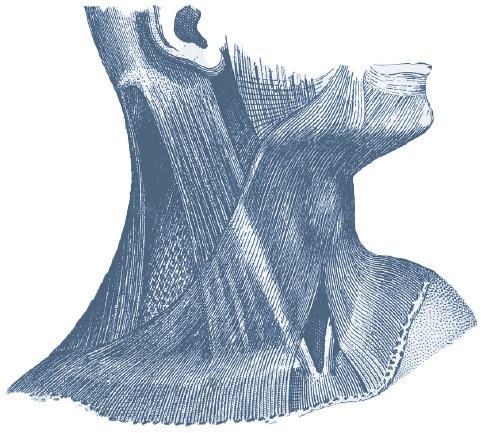
Our body is a whole, continuous, combined 3D fiber system that builds all tissues and organs. It means that all elements of the body are interconnected. A change in tension or structure in one area causes a reaction and compensatory remodeling in other tissues. Thomas Myers, an undisputed expert in the field of manual fascia therapy, speaks extensively about this relationship.
His hypothesis of anatomical trains revolutionized the world of physiotherapy and rehabilitation. His main discovery was that all tissues in the body are connected and gradually transform into one another, and the boundaries between them (e.g., muscles) are arbitrary. Many structures in the body work together, forming constructions composed of many smaller elements (so-called anatomy trains).
About the Method
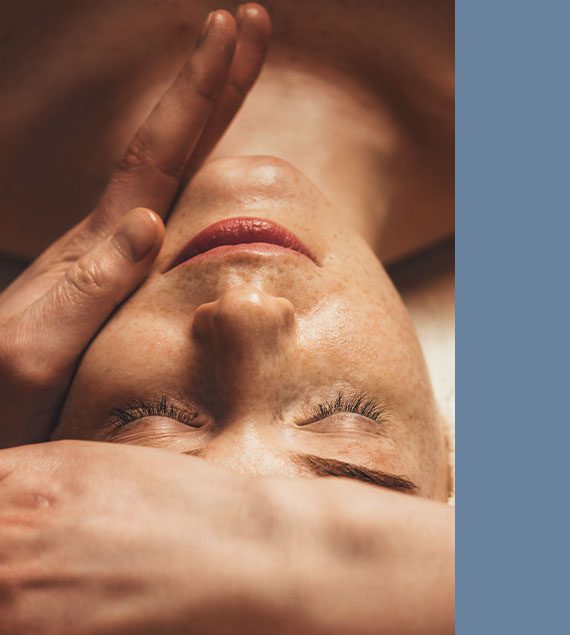

How does all this affect facial aesthetics?
The appearance of the skin depends on its health, and its health depends on the deeper layers of tissue, because it is through them that blood vessels pass to the skin, nourishing it from within. Tensions, adhesions, or tissue restrictions impair the process of nourishment and regeneration of tissues, including the skin. Therapeutic work should therefore be performed on several levels:
- multidirectional: massage, supplementation, rest, movement, hydration, normalization of mental state
- multilayered: work on bones, muscles, fascia, adipose tissue, and skin
- complete: not only the face, but the entire body.
Physiology of Massage
Every conscious therapeutic touch initiates a complex biochemical process in the tissues. The physiology of massage operates on all levels: from changes at the molecular level in cells to changes in the structures of organs and tissues. When a therapist performs mechanical movement on tissues, pressure is transmitted to the entire cellular system — from muscle and collagen fibers to
immune cells. During strong pressure, the concentration of Ca2+ immediately increases in mast cells and histamine secretion begins.
Histamine is a very powerful vasodilator, which is why we observe skin reddening during massage. Subsequently, we observe the process of mechanotransduction — stretching of muscle cells activates integrins and other signaling molecules, leading to increased protein and energy synthesis. Massage also reduces the activity of pro-inflammatory cytokines, contributing to pain reduction
and accelerated tissue regeneration.
The Effect of Massage on the Body
At the tissue level (muscles, fascia, ligaments, subcutaneous adipose tissue), massage affects tissue structure and the state of intercellular substance. Various massage techniques stimulate fibroblasts — cells that manage the formation and remodeling of collagen fibers. With well-designed therapy, we can organize the arrangement of collagen fibers and increase tissue elasticity. This is crucial for maintaining or restoring proper gliding between tissue layers. This allows us to achieve a full range of motion. This, in turn, releases larger and
smaller blood vessels and nerves that pass through the layers of connective tissue. As a result, proper microcirculation processes are restored in the tissues — literally the life of our cells.
At the organ level, massage affects the circulatory system, nervous system, and hormonal balance. Vasodilation and stimulation of blood circulation at the muscle level leads to better nourishment of internal organs: the heart works in a softer mode, and organs receive more oxygen. Pressure on tissues stimulates
nerve endings, which transmit signals to the brain, which in turn activates the
parasympathetic system and the body enters relaxation mode. With regular massage, a reduction in stress levels and stress hormones (cortisol) has been observed, and heart function and sleep are also normalized.
Massage also facilitates the circulation and penetration of blood and lymph through tissues. By applying pressure to muscles and tissues, we reduce the amount of excess fluid stagnation and effectively deliver nutrients and oxygen. As a result, swelling decreases, metabolism increases, and tense areas warm up better. In an aesthetic context, these positive effects of refreshment, lifting, and rejuvenation
are visible precisely through the restoration of circulation at all tissue levels, hydration of fascia layers, and through the remodeling (reorganization) of collagen and elastin fibers. All of this manages the regeneration process, which occurs at both the biochemical and structural levels.

My Method
Marie Margo Facial Aesthetic Rehabilitation, which I developed, is an advanced system of manual tissue healing that combines solutions from various therapeutic fields, such as lifting techniques, myofascial techniques, anti-adhesion techniques, elements of osteopathic techniques, and deep tissue massage techniques. The treatment program was created based on current medical knowledge while maintaining mindful attention and respect for human biology. In practice, it results in deep and long-lasting restoration of tissue structure, position, and function. It therefore allows for achieving an aesthetic effect while actually focusing on the causes of pathological changes.
How It Was Created
My method is the result of years of study, practice, creation, and analysis of photographic documentation illustrating the progress of therapy for hundreds of my clients. Every training I attended and every technique I learned, I incorporated into my work with clients, tested it, and refined it. I kept only those that produced clear therapeutic and aesthetic effects, and then supplemented them with my own techniques. Such actions brought exceptional results, and the treatment program became increasingly comprehensive.
F.A.R. at the ACADEMY
The F.A.R. method is also the substantive foundation of teaching program at my Academy. It is a complex of 5 training programs covering manual techniques for working on various structures of the face, skull, and body. These techniques are combined into logical sequences that correspond to tissue physiology and take into account the mechanisms of deformation processes. The order of the treated zones is not random, which is why I recommend sticking to it when performing treatments in the salon. By maintaining this essential working condition, techniques from different programs (Sculpting Face Lift, Facial or Body Aesthetic Rehabilitation, Aesthetic Osteopathy) can be creatively combined to build personalized, unique therapy for a given patient.
02
About the Method

How does all this affect facial aesthetics?
- multidirectional: massage, supplementation, rest, movement, hydration, normalization of mental state
- multilayered: work on bones, muscles, fascia, adipose tissue, and skin
- complete: not only the face, but the entire body.
Physiology of Massage
Every conscious therapeutic touch initiates a complex biochemical process in the tissues. The physiology of massage operates on all levels: from changes at the molecular level in cells to changes in the structures of organs and tissues. When a therapist performs mechanical movement on tissues, pressure is transmitted to the entire cellular system — from muscle and collagen fibers to
immune cells. During strong pressure, the concentration of Ca2+ immediately increases in mast cells and histamine secretion begins.
Histamine is a very powerful vasodilator, which is why we observe skin reddening during massage. Subsequently, we observe the process of mechanotransduction — stretching of muscle cells activates integrins and other signaling molecules, leading to increased protein and energy synthesis. Massage also reduces the activity of pro-inflammatory cytokines, contributing to pain reduction
and accelerated tissue regeneration.
The Effect of Massage on the Body
At the tissue level (muscles, fascia, ligaments, subcutaneous adipose tissue), massage affects tissue structure and the state of intercellular substance. Various massage techniques stimulate fibroblasts — cells that manage the formation and remodeling of collagen fibers. With well-designed therapy, we can organize the arrangement of collagen fibers and increase tissue elasticity. This is crucial for maintaining or restoring proper gliding between tissue layers. This allows us to achieve a full range of motion. This, in turn, releases larger and
smaller blood vessels and nerves that pass through the layers of connective tissue. As a result, proper microcirculation processes are restored in the tissues — literally the life of our cells.
At the organ level, massage affects the circulatory system, nervous system, and hormonal balance. Vasodilation and stimulation of blood circulation at the muscle level leads to better nourishment of internal organs: the heart works in a softer mode, and organs receive more oxygen. Pressure on tissues stimulates nerve endings, which transmit signals to the brain, which in turn activates the
parasympathetic system and the body enters relaxation mode. With regular massage, a reduction in stress levels and stress hormones (cortisol) has been observed, and heart function and sleep are also normalized.
Massage also facilitates the circulation and penetration of blood and lymph through tissues. By applying pressure to muscles and tissues, we reduce the amount of excess fluid stagnation and effectively deliver nutrients and oxygen. As a result, swelling decreases, metabolism increases, and tense areas warm up better. In an aesthetic context, these positive effects of refreshment, lifting, and rejuvenation
are visible precisely through the restoration of circulation at all tissue levels, hydration of fascia layers, and through the remodeling (reorganization) of collagen and elastin fibers. All of this manages the regeneration process, which occurs at both the biochemical and structural levels.
My Method
What It Is
Marie Margo Facial Aesthetic Rehabilitation, which I developed, is an advanced system of manual tissue healing that combines solutions from various therapeutic fields, such as lifting techniques, myofascial techniques, anti-adhesion techniques, elements of osteopathic techniques, and deep tissue massage techniques. The treatment program was created based on current medical knowledge while maintaining mindful attention and respect for human biology. In practice, it results in deep and long-lasting restoration of tissue structure, position, and function. It therefore allows for achieving an aesthetic effect while actually focusing on the causes of pathological changes.
How It Was Created
My method is the result of years of study, practice, creation, and analysis of photographic documentation illustrating the progress of therapy for hundreds of my clients. Every training I attended and every technique I learned, I incorporated into my work with clients, tested it, and refined it. I kept only those that produced clear therapeutic and
aesthetic effects, and then supplemented them with my own techniques. Such actions brought exceptional results, and the treatment program became increasingly comprehensive.
F.A.R. at the ACADEMY
The F.A.R. method is also the substantive foundation of teaching program at my Academy. It is a complex of 5 training programs covering manual techniques for working on various structures of the face, skull, and body. These techniques are combined into logical sequences that correspond to tissue physiology and take into account the mechanisms of deformation processes. The order of the treated zones is not random, which is why I recommend sticking to it when performing treatments in the salon. By maintaining this essential working condition, techniques from different programs (Sculpting Face Lift, Facial or Body Aesthetic Rehabilitation, Aesthetic Osteopathy) can be creatively combined to build personalized, unique therapy for a given patient.

